Alzheimer's already has a working molecule. Entelec is the AI built to perfect it.
Join us, and the millions of patients waiting for an end to Alzheimer's.
The human body already produces antibody molecules that can destroy amyloid plaques found in Alzheimer's patients. Alzyme, a specific antibody fragment isolated from a unique human antibody library, was validated in three mouse models. At a low dose, the treatment cleared 28% of brain plaque in ten days. Crucially, it achieved this clearance safely, without exacerbating the baseline inflammation and microbleeds typically associated with Alzheimer's disease.
Keystone Sciences' reasoning engine, Entelec, just solved a harder problem. c-Myc, an oncogene behind more than 70% of human cancers, had resisted drug design for thirty years: intrinsically disordered, no stable pocket, nothing for conventional methods to grip. Entelec designed a functional inhibitor on the first synthesis attempt, predicted the binding rank of every candidate compound before any were made, and did it for under $50,000.
This is a proposal to put that engine to work on Alzheimer's.
Healthy people already carry an antibody that destroys Alzheimer's plaque.
The goal of our program is to engineer Alzyme so that it destroys amyloid aggregates faster, lasts longer in the body, and easily penetrates the brain, where Alzheimer's patients need it most. These are the critical features a therapy-grade molecule should present.
Traditional antibodies act as passive flags: they bind a single toxic molecule and wait for the specialized immune cells to clear it. Alzyme is a catabody, and works differently, in that it actively and permanently breaks down the toxic amyloid aggregates. Instead of being limited to just one toxic molecule, a catabody acts like a pair of scissors: it cuts and immediately moves on to the next molecule. Because of this continuous recycling ability, a single catabody can destroy thousands of toxic molecules over its lifetime. The most remarkable part is that the blueprint for this highly efficient therapy was found naturally in the human immune system.
Catabodies isolated from people without Alzheimer's selectively destroy misfolded amyloid-beta, the protein that forms toxic plaques in the brain. Importantly, they do not break down the Amyloid Precursor Protein (APP), from which amyloid-beta is enzymatically produced, preserving APP's other physiological functions.
Building on this foundation, ARF is developing a dual approach to target the two main drivers of Alzheimer's disease: Alzyme and Tauzyme. While Alzyme clears amyloid plaques, Tauzyme is engineered using the exact same technology to specifically cleave and destroy toxic tau tangles. Our current program prioritizes the optimization of Alzyme, where our foundational evidence is deepest, paving the way for Tauzyme to follow the same developmental template.
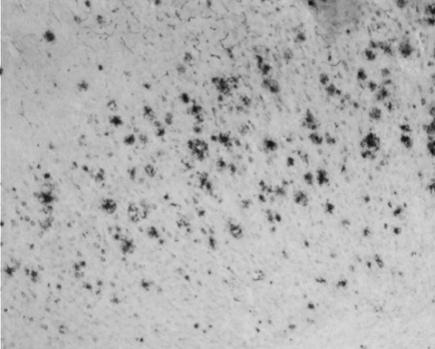 Untreated
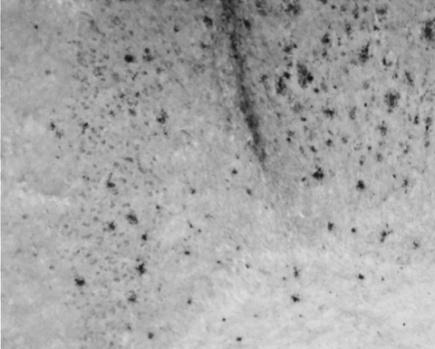 Alzyme · 10 days
Brain amyloid-β plaque in an Alzheimer mouse model, before and after a 10-day, low-dose (100 µg) course of Alzyme. Plaque burden fell 28% with zero microglial activation or microbleeds. Planque et al., JBC 2015.
Alzyme cleaves only misfolded amyloid-beta, not its precursor protein APP.
The most common neurodegenerative disease on earth. And a wall every approved drug hits in the same place.
Every approved anti-amyloid-beta drug recruits the immune system to engulf plaque through phagocytosis, a mechanism that causes inflammation in the brain. Aducanumab's EMERGE/ENGAGE trials needed eighteen months at high dose to produce a benefit so modest its clinical significance was contested. It also causes brain abnormalities in 40–41% of patients. Lecanemab and donanemab carry black-box warnings for brain bleeds linked to deaths in trials, cost upward of $26,000 a year, and clear only one of the two proteins driving the disease.
Unlike those treatments, Alzyme clears amyloid without relying on the brain's phagocytic immune cells. By avoiding this inflammatory pathway, Alzyme is unlikely to carry the risk of severe brain abnormalities, a strong safety profile already demonstrated in our preliminary animal testing.
A normal antibody binds one molecule. Ours destroys thousands.
Because Alzyme continuously cycles through multiple targets rather than stopping after one, a single dose has a massive multiplier effect.
The Efficiency Gap
A traditional antibody wins by holding on tightly. A catabody wins by permanently modifying the target and quickly letting go. The true power of our platform lies in optimizing the destruction cycle. By engineering the molecule to break down targets in fractions of a second, we exponentially multiply the amount of plaque a single treatment can clear.
The true power of a catabody lies in its ability to rapidly cleave one target molecule and immediately move on to the next. This principle, known as turnover, depends on overcoming the energy barriers at each stage of the catalytic cycle: nucleophilic attack, tetrahedral intermediate formation, acyl-enzyme intermediate formation, and final hydrolysis. For our team, every single one of these steps is an optimization target. By engineering a faster cycle, that speed is multiplied across the molecule's entire lifetime, which is exactly how a single catabody can destroy thousands of toxic targets.
Alzyme: catalytic properties and efficacy
- Degrades preformed aggregates. Alzyme actively dissolves already-formed amyloid-beta aggregates and toxic oligomers. Electron microscopy and Thioflavin T (ThT) binding assays show it dismantling dense, preformed Aβ plaques.
- Prevents new aggregates from forming. Beyond clearing existing plaque, Alzyme halts the fibrillization process, stopping freshly dissolved Aβ peptides from clumping back into toxic aggregates.
- Outperforms traditional antibodies. Conventional Aβ-binding antibodies (such as IgG 59) rely on recruiting phagocytic immune cells to clear plaque. In direct comparison assays, Alzyme was at least one to two orders of magnitude more efficient at preventing Aβ fibril formation in vitro.
- Works by catalysis, not binding. The clearance is driven strictly by active catalysis: an inactivated form of Alzyme failed to degrade fibrils or reduce ThT fluorescence at all, confirming that catalytic turnover is the mechanism of clearance.
- Clears amyloid across three animal models, with no brain abnormalities. Whether delivered as a soluble protein (intracranial or intravenous) or as AAV gene therapy, the results were consistent: amyloid plaque cleared, with no exacerbation of brain inflammation and no microbleeds.
AI in drug discovery is automating the lottery. Keystone invents medicines from the ground up.
Drug discovery is a probabilistic lottery. R&D costs double every nine years, the average approved molecule now costs $2.6 billion, and roughly 90% of clinical trials fail. Today's AI hasn't changed those numbers. It has accelerated the same broken process, recombining patterns from historical compound libraries with no underlying model of physical reality, producing candidates that rank well in silico and fail in the body.
Keystone Sciences built Entelec to reason from primary physical and biological law. They call the discipline Inventive Intelligence: a scientist specifies the exact binding mechanism, selectivity, and pharmacokinetics a candidate needs before a single molecule is synthesized. Entelec is a software compiler for physical matter. Unlike a generative model, it is a deterministic, neurosymbolic architecture that shows how and why each design works, and its outputs are falsifiable.
Multidimensional Audit
Entelec evaluates every design across physical dimensions simultaneously, from the thermodynamic to the kinetic. Logic that violates a physical constant incurs infinite cost, so hallucinations are eliminated by construction.
Contradiction Inversion
When a pathway looks unreachable, Entelec finds the constraining dimension and reframes the problem, unlocking disease spaces the industry had written off as undruggable.
Compounding Knowledge
Every resolved contradiction updates one unified knowledge graph, making each program it runs cheaper, faster, and more knowledgeable. An intelligence moat that appreciates with every run.
“Today's AI can answer the question. It still can't ask the question, because it has no framework of thinking. It sees the world through pattern recognition, not causality.”Fred Recheshter, inventor of Entelec
Entelec cracked an "undruggable" target on the first try.
Keystone pointed Entelec at c-Myc, the oncogene driving more than 70% of human cancers, which had resisted small-molecule design for over thirty years. Like amyloid-beta, c-Myc is intrinsically disordered with no stable pocket, leaving structure-based docking with nothing to grip.
Entelec designed a series of small molecules to act as a kinetic trap, locking the protein in an unfolded, non-productive state. Tested in a human colorectal-carcinoma reporter assay, the candidates produced target-specific transcriptional inhibition inside living cell nuclei on the first synthesis run, without the years of iterative medicinal chemistry conventional development demands.
Before any compound was made, Entelec rank-ordered the candidates by their potency. When the results came back, the lab confirmed Entelec's predicted ranking in sequence, because the engine was working from the same physics as the experiment.
Pharma gave up on c-Myc for the same structural reasons it has struggled with amyloid-beta and tau. Cracking c-Myc on the first attempt is the proof of concept for this program.
From the logic of markets, to the logic of molecules.
Fred Recheshter was born in Soviet Kishinev and repatriated to Israel at eighteen. From age twelve he was trained in TRIZ, the theory of inventive problem-solving, by direct students of its founder, Genrich Altshuller, who developed the framework inside a Soviet labor camp. That way of thinking, Fred says, became part of his genetics.
He carried it through mathematics and computer science degrees and two decades on Wall Street. He built the high-frequency trading infrastructure at Goldman Sachs that cut execution latency from 250 microseconds to single digits, and served as Citi's chief architect of options market-making. Then he turned the same framework on molecular biology, a pursuit he had wanted since childhood. Entelec is the result: an engine that asks what structure the problem has before attempting to solve it, rather than reaching for the nearest historical pattern.
We're already running this playbook, at the atomic scale.
Before this collaboration, ARF was already applying AI to optimize a nature-derived therapeutic. In partnership with the Amaro Lab at UC San Diego, one of the leading groups in the computational structural biology of viral proteins, the foundation is developing a functional-cure candidate for HIV built from the biology of the rare individuals whose immune systems suppress the virus without treatment. That program drew Keystone's attention and led directly to this collaboration.
Atomic-resolution simulation of a broadly neutralizing antibody engaging the HIV envelope. Amaro Lab, UC San Diego (Shehata, Casalino, Duquette et al., Nat. Commun. 2026).
Engineering a breakthrough.
By engineering Alzyme into an Fc fusion molecule, scientists in ARF already stretched Alzyme's half-life from 1.8 hours to 19.5, an ~11× gain, while pushing its per-molecule kill count to ~7,371 amyloid-beta targets. Entelec can evaluate 50,000+ variants simultaneously. Every single variant is constrained by the same physical laws that dictate the molecule's real-world behavior in the body, ensuring our optimizations are grounded in reality.
Entelec will optimize the energy barrier at each step of the catalytic cycle, subject to one overriding constraint: the molecule's lowest-energy conformation must retain or improve its catalytic activity. An energy-landscape optimization at scale, the kind of work serious compute was built for.
Entelec lowers the activation barrier at every step of the catalytic cycle, so the molecule's most stable shape stays its most catalytic one. An energy-landscape optimization, run across 50,000+ variants.
Our process, end to end
- ARF defines the target. Starting from the validated Alzyme amyloid-beta catabody, we fix the optimization criteria: catalytic rate, conformational stability without forming aggregates, long half-life in the body, and efficient brain penetration.
- Entelec engineers the candidates. Reasoning from physical law through AlphaFold, ProteinMPNN, OpenMM, and Chai-1, it filters 50,000+ variants down to physics-cleared, optimized sequences.
- ARF validates at the bench. Expression, purification, in vitro and in vivo testing, with real measurements fed back to sharpen the next pass.
- Together, we advance a lead. The loop converges on fully validated candidates for IND-enabling studies.
When Alzyme is optimized, the same engine turns to Tauzyme. What begins with amyloid-beta ends with both.
The scientists who discovered Alzyme, and the engine built to perfect it.

Discovered catalytic antibodies (Science, 1989). Decades of NIH-funded work.
20 years translating catabody science from mechanism to validated result; 25+ peer-reviewed publications.
Inventor of Entelec. 20+ years building complex, scalable platforms in first-principles reasoning, mathematics, and computer science; wrote high-frequency-trading algorithms at Goldman Sachs.
20+ years in biotech and pharma R&D, with multiple clinical-stage and approved therapeutics. Keeps every candidate held to rigorous development standards.
Business development and strategic transactions; co-founded one of the earliest ML-powered oncology companies, from inception through post-IPO.
Founder and Executive Director of the Abzyme Research Foundation.
OpenAI can power the end of Alzheimer's.
We're asking the OpenAI Foundation to fund the full program: $1.18M for Keystone's Entelec computational optimization and $1.15M for ARF's wet-lab synthesis and validation. Support can take the form of funding or in-kind compute. In return: the first systematic attempt to turn a mechanism the human body already uses into a disease-modifying Alzheimer's therapeutic candidate, and a concrete demonstration of what reasoning AI can accomplish in medicine.